What Happens If Your Business Operates Without TNPCB Hazardous Waste Authorization?
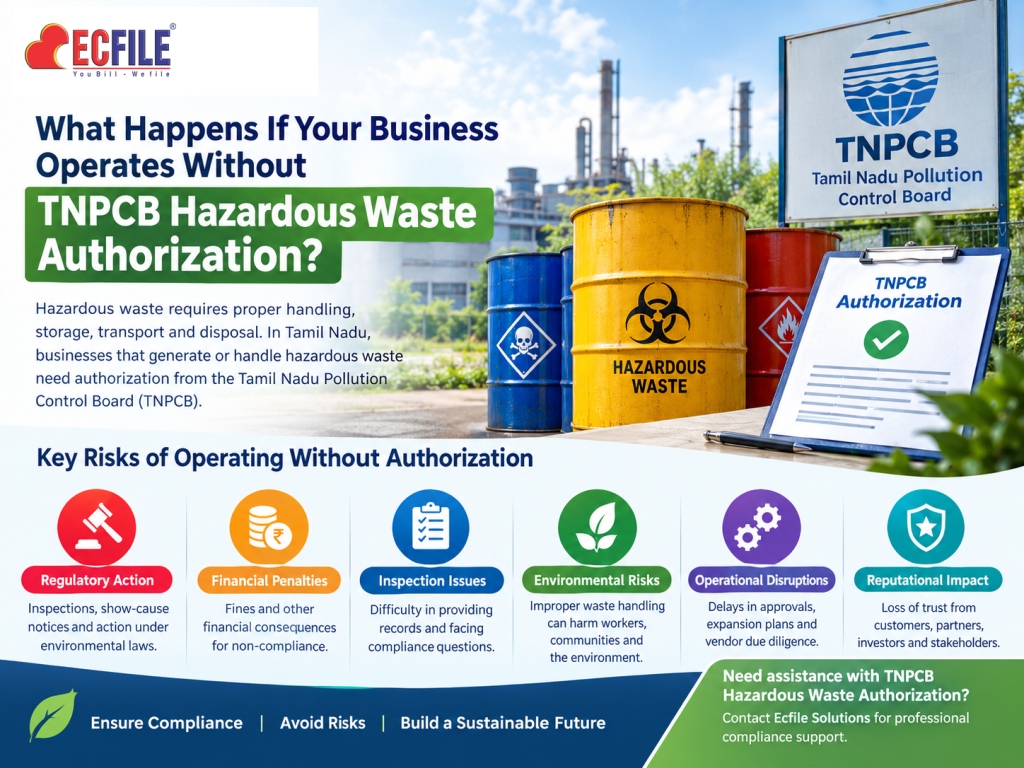
Businesses that generate, handle, store, transport, or dispose of hazardous waste have important environmental compliance responsibilities. In Tamil Nadu, industries and establishments dealing with hazardous waste may need authorization from the Tamil Nadu Pollution Control Board (TNPCB) under the applicable environmental regulations.
Operating without the required authorization can expose a business to regulatory action, financial consequences, operational difficulties, and reputational risks.
In this blog, we explain why TNPCB hazardous waste authorization is important and what businesses should consider if they are operating without the required approval.
What Is TNPCB Hazardous Waste Authorization?
TNPCB hazardous waste authorization is a regulatory approval applicable to eligible businesses involved in the generation, collection, storage, treatment, processing, recycling, recovery, utilization, or disposal of hazardous waste.
The authorization helps regulators monitor how hazardous waste is handled and ensures that businesses follow prescribed procedures for safe storage, transportation, treatment, and disposal.
Industries such as manufacturing units, chemical industries, engineering facilities, laboratories, automobile-related businesses, and other establishments may generate hazardous waste depending on their activities.
What Happens If a Business Operates Without Authorization?
1. Regulatory Action
Operating a facility without the required environmental authorization can result in action by the pollution control authorities.
TNPCB may inspect the premises, identify non-compliance, and require the business to take corrective measures. Depending on the nature and seriousness of the violation, further regulatory action may also be initiated under applicable environmental laws.
2. Financial Consequences
Non-compliance with environmental requirements can lead to financial consequences.
Depending on the applicable law, the nature of the violation, and the circumstances of the case, authorities may impose penalties or take other measures available under the relevant regulatory framework.
Businesses should therefore avoid assuming that obtaining authorization later will automatically eliminate the consequences of previous non-compliance.
3. Problems During Inspections
Businesses handling hazardous waste may be subject to inspections and requests for records relating to waste generation, storage, transportation, treatment, and disposal.
If the required authorization or supporting records are unavailable, the business may face additional compliance questions and may be required to demonstrate how hazardous waste has been managed.
Maintaining proper documentation from the beginning can make regulatory compliance much easier.
4. Risk of Improper Hazardous Waste Management
Hazardous waste must be handled carefully because improper storage, transportation, treatment, or disposal can create risks to workers, nearby communities, soil, water, and the environment.
Authorization and compliance requirements help establish a controlled system for managing hazardous waste rather than allowing waste to be handled without appropriate oversight.
5. Operational and Business Disruptions
Environmental non-compliance can create difficulties when a business needs to obtain or maintain other regulatory approvals, expand operations, change processes, or demonstrate its compliance status to customers and other stakeholders.
For businesses working with larger companies, environmental compliance may also become an important part of vendor or supplier due diligence.
6. Reputational Impact
Environmental compliance is increasingly important for businesses of all sizes.
Failure to properly manage hazardous waste can affect the credibility of an organization, particularly when customers, business partners, investors, or other stakeholders request evidence of environmental compliance.
Who Should Check Their TNPCB Compliance?
Businesses should review their compliance requirements if their operations involve the generation or handling of potentially hazardous waste.
This may include:
- Manufacturing industries
- Chemical and pharmaceutical units
- Engineering and metal-processing industries
- Automobile and automobile-component units
- Paint and solvent-related operations
- Laboratories and testing facilities
- Waste treatment and recycling facilities
- Other industries generating notified hazardous waste
The exact requirements depend on the nature of the business, the waste generated, quantities, processes involved, and applicable environmental regulations.
What Should You Do If You Are Currently Operating Without Authorization?
If your business has identified a potential authorization requirement, it is better to address the issue promptly rather than continue without reviewing the compliance position.
A practical approach is to:
- Identify the type of waste generated by your business.
- Determine whether the waste falls under applicable hazardous-waste regulations.
- Review your existing TNPCB approvals and consents.
- Check whether hazardous waste authorization is required for your activities.
- Prepare the required documents and supporting information.
- Submit the appropriate application to TNPCB through the applicable process.
- Maintain proper records of hazardous waste generation, storage, transportation, and disposal.
- Follow the conditions specified in the authorization and other applicable approvals.
Professional assistance can help businesses understand the applicable requirements and prepare their documentation correctly.
Why Choose Ecfile Solutions?
Understanding environmental regulations and completing the required documentation can be challenging for business owners.
Ecfile Solutions can assist businesses with the TNPCB hazardous waste authorization process, documentation, application support, and compliance guidance.
Our goal is to make the compliance process simpler and help businesses take the necessary steps toward responsible hazardous waste management.
Conclusion
Operating a business without the required TNPCB hazardous waste authorization can create regulatory, financial, operational, and environmental risks. Businesses that generate or handle hazardous waste should review their applicable requirements and ensure that the necessary approvals and records are maintained.
If you are unsure whether your business requires TNPCB hazardous waste authorization, getting professional guidance can help you understand your compliance requirements and take the appropriate next steps.
Need assistance with TNPCB Hazardous Waste Authorization? Contact Ecfile Solutions for professional compliance support.