
CRS BIS Certification in India: A Complete Guide for Businesses
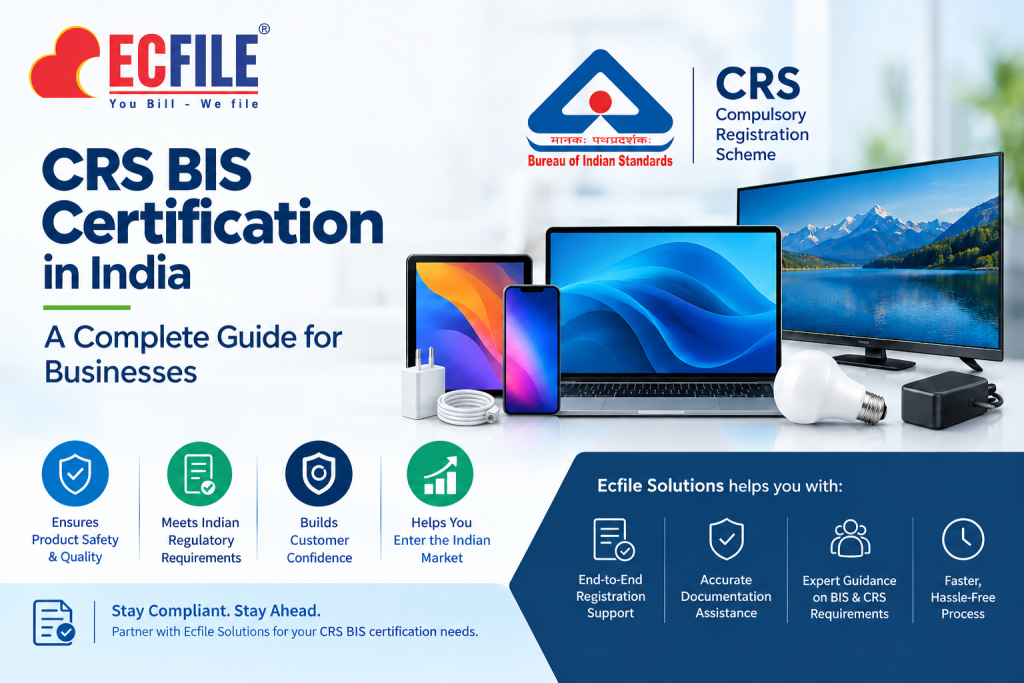
What Is CRS BIS Certification?
CRS (Compulsory Registration Scheme) is a certification scheme operated by the Bureau of Indian Standards (BIS) for notified electronic and IT products in India. It helps ensure that covered products comply with the applicable Indian safety standards before being placed on the market.
Manufacturers planning to manufacture, import, or sell products covered under CRS must obtain the required BIS registration according to applicable regulations.
Which Products Require CRS BIS Certification?
CRS applies to various notified electronic products, including:
- Laptops, notebooks, and tablets
- Mobile phones
- Power adapters and power supplies
- LED lighting products
- Televisions and specified display products
- Other notified electronic and IT equipment
Product eligibility should be verified against the latest BIS notifications and applicable Indian Standards.
CRS BIS Certification Process
The general registration process involves the following steps:
- Product Identification: Determine whether the product falls under CRS and identify the applicable Indian Standard.
- Product Testing: Submit samples to a BIS-recognized laboratory for testing.
- Document Preparation: Prepare the test report, manufacturer details, product specifications, and required declarations.
- Application Submission: File the application through the official CRS portal.
- BIS Review: BIS examines the application and may request additional information.
- Registration Grant: Once approved, the manufacturer must follow the applicable product-marking and compliance requirements.
Documents Required for CRS BIS Registration
Commonly required documents may include:
- Manufacturer’s business and address details
- Product specifications, brand, and model information
- Test report from a BIS-recognized laboratory
- Required declarations and undertakings
- Authorization documents, where applicable
- Authorized Indian Representative (AIR) documents for eligible foreign manufacturers, where required
The exact requirements depend on the product and current BIS procedures.
Benefits of CRS BIS Certification
Obtaining the required CRS registration helps businesses:
- Meet applicable Indian regulatory requirements
- Demonstrate compliance with relevant product safety standards
- Prepare products for the Indian market
- Build customer confidence
- Reduce avoidable compliance delays
Conclusion
CRS BIS certification is an important requirement for electronic products covered under India’s Compulsory Registration Scheme. Understanding the applicable standards, completing product testing, and preparing accurate documentation can help businesses manage the registration process efficiently.
Frequently Asked Questions About CRS BIS Certification
1. Is CRS BIS registration mandatory in India?
CRS registration is mandatory for products covered by applicable compulsory registration orders, subject to the provisions and exemptions of those orders. Businesses should verify whether their specific product is covered.
2. Who can apply for CRS BIS registration?
Eligible manufacturers located in India or abroad can apply for registration of products covered under CRS. Importers and brand owners should determine the appropriate applicant and manufacturer arrangements under the applicable BIS rules.
3. Is product testing required for CRS registration?
Yes. The CRS process generally requires a test report from a laboratory recognized by BIS for the relevant product and Indian Standard.
4. How long does CRS BIS certification take?
The processing time depends on product testing, document readiness, application scrutiny, and responses to queries. Applicants should check the current official procedure and avoid relying on a guaranteed approval timeline.
5. Can foreign manufacturers obtain CRS BIS registration?
Yes. Foreign manufacturers can apply for eligible products. Depending on their circumstances, they may need to appoint an Authorized Indian Representative and provide additional documents.
6. Does one registration cover every model of a product?
Not necessarily. Model coverage and inclusion requirements depend on the applicable CRS rules. Manufacturers should verify whether each intended model is covered by the existing registration or requires a separate application or inclusion request.
7. What happens if a product requires CRS registration but does not have it?
Manufacturing, importing, distributing, or selling a covered product without the required registration may violate applicable legal requirements. Businesses should confirm compliance before placing such products on the market.